

P2P News CW 13/2026: Debitum Drama, FF Forest Loyalty Program & more
Debitum is under scrutiny following renewed criticism and ongoing back-and-forth within the community, putting the platform back into the spotlight. At the same time, the FF Forest Loyalty Program has officially launched, introducing a new incentive structure that rewards investors for both portfolio size and long-term commitment. With yield boosts of up to 1.3%, the FF Forest Loyalty Program aims to strengthen retention while bringing returns closer to early-stage levels. Additional updates include new loan originators at Income and PeerBerry as well as continued recovery challenges at Estateguru.
Table of Contents
#1 Debitum under fire – another never-ending story?
Debitum faced heavy criticism last week following a new report by Karsten from BeyondP2P. According to his analysis—based on land registry data, annual reports, and public records—around 87% of the portfolio is linked to a network of related parties connected to former politician Guntars Galvanovskis, raising concerns about regulatory oversight.
One of the main allegations focuses on the largest loan originator, LFDF, which reportedly acquired 81% of its forestry assets through intermediaries tied to family members—at markups of around 50% after an average holding period of 203 days. The report suggests that roughly €0.34 of every invested euro flows into this network. Additional claims include 14 allegedly incorrect disclosures in official reports and a non-disclosed politically exposed person (PEP) status linked to LFDF’s beneficial owner.
Debitum responded with a detailed 13-page statement, which was followed by a counter-response from BeyondP2P on the same day—adding further complexity and continuing the ongoing back-and-forth between both sides.
This marks the third wave of critical coverage since December. While independent research and scrutiny are valuable, the situation increasingly resembles a public exchange of accusations and rebuttals rather than a constructive resolution process, with extended discussions across community channels that offer limited clarity. From a personal perspective, existing investments remain unchanged for now. Based on past experience, the platform has operated professionally under different leadership structures, despite the current controversy.
#2 Estateguru Germany recovery continues to drag on
Estateguru has released another update on its problematic German loan portfolio—and anyone expecting a quick resolution will likely be disappointed.
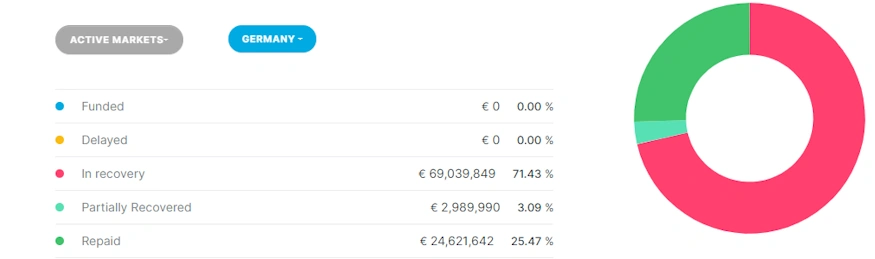
Germany has effectively been inactive on the platform since the end of 2022, with the focus now entirely on recovery. All loans are in the workout phase, and this process is expected to remain a key topic throughout 2026. According to Estateguru, seven loans were resolved last year, with another three to five cases projected for 2026. While this shows some progress, it is still far from a meaningful breakthrough.
Market conditions have stabilized slightly, particularly for residential properties in prime locations. However, most of the problematic cases are tied to less attractive segments—development projects in secondary locations, long sales cycles, and significant pricing pressure. Buyers are present, but highly selective, and in some cases, auctions attract little to no bids or offers well below valuation levels.
The main bottleneck remains the German legal system. Courts are overloaded, procedures are highly regulated, and insolvency processes continue to take considerable time. This latest update does little to change that outlook, suggesting that 2026 will once again be a year of slow, case-by-case recoveries rather than rapid repayments.
#3 TWINO reopens exit window for Russian exposures
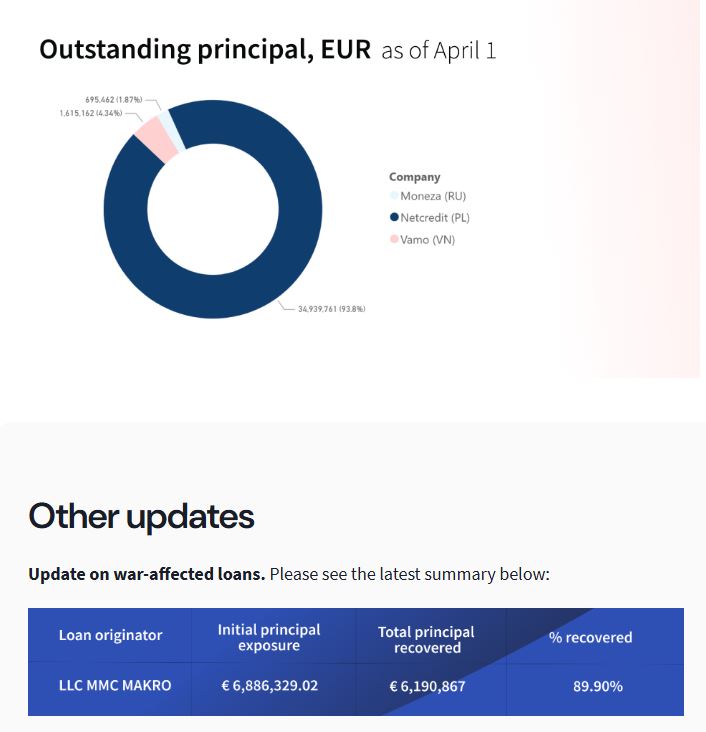
TWINO (via its group entity Finno) has launched another sales window for outstanding claims related to Russian loans. Investors can sell their positions until April 30—or until the €100,000 cap is reached—at a 20% discount in exchange for faster liquidity. Those who choose not to sell will continue in the existing monthly repayment process.
The timing of this move is particularly noteworthy. The first sales round saw strong participation, and overall recoveries from Russian exposures have already exceeded 80%. This suggests that TWINO is now actively pushing to close this chapter.
As a result, the decision is less straightforward than during the initial offer. At that time, the remaining timeline was more uncertain, making discounted exits more appealing for many investors. Today, with a large portion already repaid and a clear path toward resolution, accepting a discount may be less attractive.
This option is therefore mainly relevant for investors seeking immediate liquidity or those who prefer to fully exit the Russian exposure for peace of mind.
#4 Income and PeerBerry add new loan originators
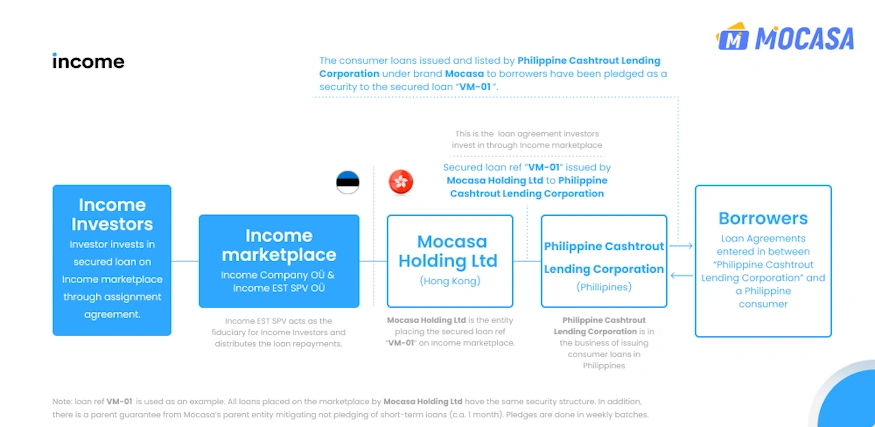
Income Marketplace* has introduced a new lender, Mocasa, marking its first entry from the Philippines. The fintech, active since 2021, has served over 200,000 users and issued approximately €17.6 million in loans to date. Investors can access short-term business loans with returns between 12% and 13% and maturities of one to three months. Mocasa is not entirely new to the space, having previously operated on other platforms and even attempting to launch its own.
The structure is set up via a Hong Kong holding, secured by pledged consumer loans and an additional guarantee. The reported junior share ranges between 28% and 36%. Notably, borrower interest rates exceed 100%, supported by data-driven risk management and a focus on financial inclusion.
Meanwhile, PeerBerry is also expanding its offering. A new lender, Bazel LTU from the Aventus Group ecosystem, is financing business loans tied to a poultry project in Tanzania, with durations of 90 to 180 days and returns around 8%.
In addition, Spain-based RealCredito is introducing short-term loans with yields of roughly 9%, expected to be available on a daily basis. Both new lenders come with buyback obligations and group guarantees, helping to increase available investment volume on the platform after a longer period of limited supply.
#5 Launch of FF Forest loyalty program for investors
FF Forest has officially introduced its previously announced loyalty program, focusing on financial incentives for long-term investors.
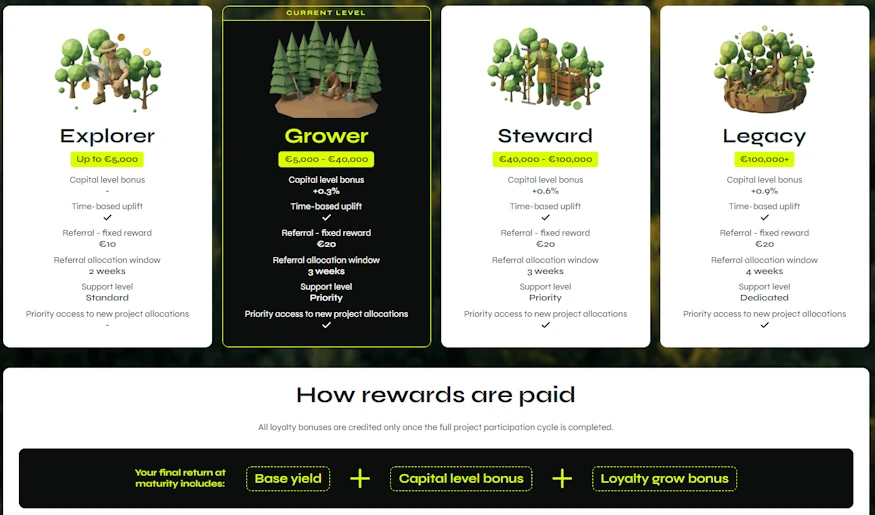
The core mechanism combines portfolio size and holding duration. Depending on the invested amount, returns can increase by up to 0.9%, with an additional time-based bonus of up to 0.4% for keeping funds invested over longer periods. These bonuses are automatically applied across the portfolio, but only affect new investments.
At the upper end, this can lead to noticeable yield enhancements, particularly for larger portfolios held over multiple years. To qualify, investors must maintain a minimum portfolio of €500—falling below this threshold resets both status and time-based bonuses.
Currently, the maximum achievable interest rate reaches around 18%, based on a 16.7% base rate plus the full loyalty bonus. This effectively brings returns back to levels seen in the early days of the platform, although initial cashback incentives are no longer part of the offering. As often seen, platforms tend to adjust conditions once growth stabilizes, meaning early investors typically benefit the most—assuming, of course, that the underlying loans perform as expected.
Leave a Reply
Want to join the discussion?Feel free to contribute!