

P2P News CW 15/2026: Cashwagon default – Mintos investors face total loss after final write-off
The Cashwagon case has finally reached its end, with the lender now officially written off and remaining investor claims effectively lost. After years of uncertainty, it stands as one of the most notable defaults in the P2P space. At the same time, the latest news cycle shows a mixed picture across the market—from strong valuation increases at Ventus Energy and growing loan volumes at PeerBerry to ongoing operational challenges at Loanch and fresh insights from the 2025 reporting season.
Please note my disclaimer: I do not provide investment advice and I do not make any individual investment recommendations. This article reflects only my personal opinions and observations and is intended for informational purposes only. Investing in P2P loans and project financing involves risks, including the possibility of a total loss of your invested capital. Past performance is not a reliable indicator of future results. Links to investment platforms may be affiliate or promotional links (usually marked with *), meaning I may receive a commission if you sign up or invest through them. All content and ratings are created independently and are not influenced by any platform provider.
#1 Mintos writes off Cashwagon investments for good
It’s now official: Mintos* has confirmed in its latest recovery update that the lender Cashwagon will be fully written off. For investors, this effectively means that any remaining claims are considered lost.
The situation has been dragging on for nearly six years. Back in June 2020, operations in Vietnam, Indonesia, and the Philippines were suspended after authorities launched investigations and froze company accounts. Shortly after, business activities came to a complete halt, leaving Cashwagon unable to meet its financial obligations.
Attempts to attract new investors ultimately failed. By the end of 2020, the company had already initiated liquidation proceedings in Singapore and across its Southeast Asian entities, making any meaningful recovery highly unlikely at that point.
Some losses had already been realized earlier. Around €0.8 million was lost in the Indonesian portfolio alone. However, the Vietnam exposure is significantly larger and represents the bulk of the write-off, with approximately €5.2 million now deemed unrecoverable.
#2 Ventus Energy significantly increases power plant valuation
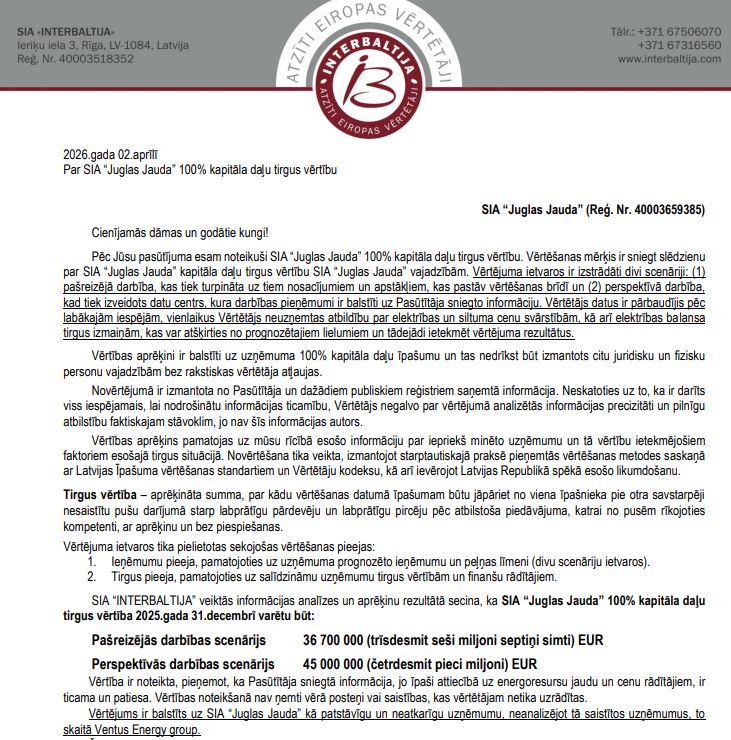
Ventus Energy* has sharply increased the valuation of its Jugla power plant. Following the expansion to a total capacity of 50.9 MW, the asset is now valued at €36.7 million, up from €17.65 million at the time of acquisition. The new estimate is based on an updated assessment using two scenarios, with the optimistic case reaching as high as €45 million.
A key driver behind this revaluation is the addition of a 10 MW electric boiler, which significantly improves operational flexibility. Electricity can now be purchased strategically during low-price periods and converted into heat. Combined with heat storage capabilities, this allows for more efficient energy sales and improved margin potential through price arbitrage.
In addition, preparations are underway to support a 15 MW data center. The excess heat generated is expected to be fed directly into the district heating network, creating an additional revenue stream while ensuring stable electricity demand. While part of the valuation relies on forward-looking assumptions, it appears reasonable given the current setup and expanded infrastructure.
#3 Loanch still operating without payment provider
Since January 21, activity on Loanch has effectively been frozen. Following the loss of its payment partner Quicko, investors have been unable to make deposits or withdrawals for nearly three months, and a replacement provider is still not fully operational.
According to Loanch, the main challenge lies in significantly stricter AML and compliance requirements imposed by new payment providers. This has required additional verification procedures as well as adjustments to technical integrations. At the same time, the platform has been working on setting up a new legal entity and restructuring parts of its operations.
Loanch states that it is currently onboarding several payment providers. One of them is reportedly in an advanced stage but has not yet gone live. Going forward, the platform გეგმ to work with multiple providers simultaneously to reduce dependency on a single partner.
Investor funds, according to the company, remain segregated and cannot be used for operational purposes. Once the new setup is completed, balances are expected to be transferred directly from the previous provider to the new accounts.
However, there is still no clear timeline. Loanch continues to communicate that a solution is close and plans to provide weekly updates, while uncertainty among investors continues to grow.
#4 P2P reporting season kicks off
The first P2P platforms have published their 2025 annual reports, offering a deeper look into how the sector is evolving. For investors, these reports are essential to understand changes in risk, growth, and underlying business models. Here’s a quick overview of the key updates.
NEO Finance reports a strong increase in profitability, with net profit rising to €1.5 million from €0.5 million the previous year. Revenue grew by 32% to €8 million, driven largely by its payment division Neopay, which expanded by 73%, while the lending segment remained stable.
Mintos now manages €795 million in assets under management across 664,000 investors. The platform continues to shift towards a multi-asset model, with bond investments growing by over 100%. Revenue reached €14.1 million, although the company still reported a loss of around €2 million due to ongoing investments.
Debitum continues its operational growth, with user numbers increasing by 59% to over 29,000. The platform is also expanding across multiple EU countries via passporting and recently underwent a full ownership change.
Indemo is scaling rapidly, with assets under management reaching €22.8 million—more than tripling year-over-year. Total invested capital is approaching €25 million, and completed deals have delivered returns between 15% and 38%. Des
pite this growth, the company remains unprofitable.
Nectaro is still in a strong growth phase. With around €20 million in AUM and approximately 10,000 investors, the platform reported a loss of over €1.4 million, reflecting continued investment in technology and expansion.
TWINO presents mixed results. Profit dropped significantly to around €92,000, while maintaining an investment volume of €38 million.
Viainvest remains profitable, though earnings declined to roughly €228,000 from more than €700,000 the year before. According to the report, the company invested heavily in IT and process optimization, although these improvements are not yet clearly visible on the platform itself.
Investors with exposure to any of these platforms—or those considering new investments—should review the full reports carefully and assess the figures independently.
#5 PeerBerry increases loan supply significantly
Loan availability on PeerBerry is picking up again. The Aventus Group plans to increase loan volumes by up to 20% in April compared to the previous month, driven by growing business activity across several core markets.
A major focus is on short-term loans with maturities of up to six months, which continue to see strong investor demand. Growth is coming from regions such as South Africa, Spain, Poland, and Romania. In addition, real estate projects under the Aventus Home brand in Spain are expected to play a larger role on the platform.
At the same time, PeerBerry is expanding its lender base. New partners backed by group guarantees are planned, and the company is also exploring expansion into new markets, including Australia, Canada, and the United States.
The current portfolio exceeds €120 million. The Aventus Group operates in more than 20 countries and has issued over €7 billion in loans since its inception. Notably, the group has consistently met its obligations to investors, including the full repayment—principal and interest—of €51.4 million linked to Ukraine war-affected exposures, which has further strengthened investor confidence.
Leave a Reply
Want to join the discussion?Feel free to contribute!