

In this Triple Dragon Funding review, you’ll learn how TP Funding works, what returns to expect, and which risks matter most before investing. Triple Dragon Funding is a Latvia-based lending platform focused on gaming-related loans, offering advertised returns of up to ~14% per year.
Minimum investment is typically around €1,000, so it’s built for investors who want high-yield exposure with a clear niche. This TP Funding review is a research-based platform overview.
Personally I’m invested in TD Funding via Debitum, but not directly over their platform.
Table of Contents
Triple Dragon Funding Review: Min-Invest of 1.000 EUR @14%
Triple Dragon Funding* (short: TD Funding) is a relatively new platform, but the company behind it is far from unknown: Triple Dragon has been a proven and solid lender on Debitum for years. Now, like many other loan originators before, they launched their own platform to offer loans directly to investors — without a marketplace in between.
That comes with clear advantages, but also some trade-offs we’ll break down in this Triple Dragon Funding review. I’ve been invested in Triple Dragon loans via Debitum for years, so it was an easy decision to take a closer look here as well — especially because new platforms often come with attractive launch incentives.
TD Funding offers new investors a 2% cashback from the platform instantly until 2nd of March 2026, and it’s also an interesting way to invest beyond the typical “Baltic-only” P2P exposure.
Disclaimer
Please note my disclaimer: I do not provide investment advice and I do not make any individual investment recommendations. This article reflects only my personal opinions and observations and is intended for informational purposes only. Investing in P2P loans and project financing involves risks, including the possibility of a total loss of your invested capital. Past performance is not a reliable indicator of future results. Links to investment platforms may be affiliate or promotional links (usually marked with *), meaning I may receive a commission if you sign up or invest through them. All content and ratings are created independently and are not influenced by any platform provider.
What is Triple Dragon Funding?
Triple Dragon Funding is a crowdlending platform operated by the UK-based financing specialist Triple Dragon. Founded in London in 2016, Triple Dragon focuses on providing funding for video game and mobile app developers and publishers.
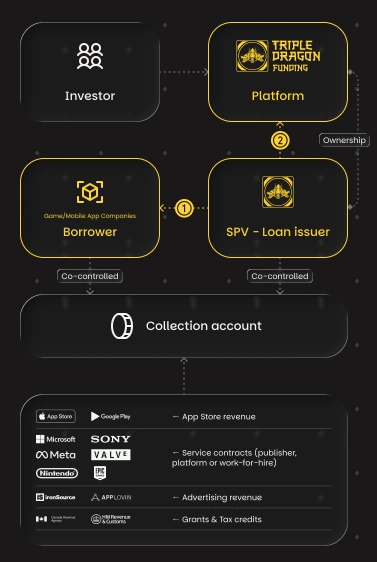
Through the platform (which is registered in Luxembourg), investors can access secured business loans that Triple Dragon issues to game studios. As collateral, Triple Dragon typically uses receivables from major tech companies such as Google, Apple, and Amazon, as well as government tax credits.
In other words, Triple Dragon acts as a specialized lender in the gaming sector and allows private investors to participate in financing these projects. Until recently, investing was mainly possible via Asset-Backed Securities (ABS) — bundles of business loans — on the P2P marketplace Debitum. Now, investors can also invest directly via Triple Dragon Funding (tdfunding.eu).
This gives investors access to a true niche: short-term, secured gaming business loans with double-digit returns, backed by payment claims generated through app and game distribution.
Triple Dragon was founded by experienced industry professionals and has attracted institutional funding over the years — a good sign for the credibility of the underlying business. On top of that, they have been active on Debitum for years and have financed 1,000+ loans with a total volume of over €35 million.
Triple Dragon Funding is a WLS white-label platform
Triple Dragon Funding is built on the technology stack of White Label Solutions (WLS), a separate business unit of the Ventus Energy Group. After successfully running its own energy investment platform, Ventus created WLS to develop and operate tailored crowdlending platforms for external clients. Triple Dragon Funding is already the third WLS client after Devon and Asterra Estate, and more platforms are expected to follow.
That’s why Triple Dragon Funding runs on the same proven backbone — including IT infrastructure, secure transaction processing, AML compliance, plus marketing and customer support systems (see the overview in the graphic below).
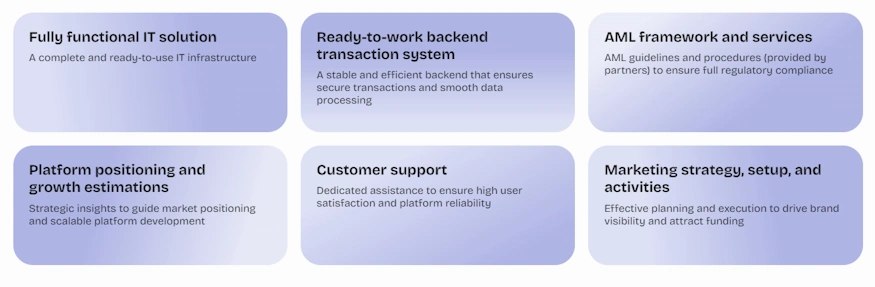
At the same time, Triple Dragon Funding remains a fully independent company: the visual and functional similarities come from the shared technology provider, not because the businesses are connected.
From an investor’s perspective, I actually see this as an additional layer of confidence. WLS knows the P2P industry inside out, and they don’t just build platforms for anyone — they need a viable concept and a credible operator, otherwise it would damage their own reputation and business model.
Triple Dragon Funding Review – All Key Facts at a Glance
Before we dive into the details of this Triple Dragon Funding review, here are the most important numbers and facts in one place.
| Founded | 2025 (parent company active since 2016) |
|---|---|
| Headquarters | Luxembourg (operates as Triple Dragon Funding S.a.r.l.); parent company founded in the UK |
| CEO / Management | Vitalijs Zalovs (involved from the start; previously CEO of Esketit) |
| Regulated | No (license application in Luxembourg is planned) |
| Assets Under Management | Approx. €30 million |
| Total Funded Loan Volume | Over €50 million |
| Number of Investors | Not disclosed yet (platform just launched) |
| Returns | No average available yet; current projects are listed at 14% |
| Buyback Guarantee | Yes — and each project is also backed by real assets/claims |
| Minimum Investment | €1,000 |
| Auto-Invest | No |
| Secondary Market | No (however, an early exit is possible after 6 months) |
| Tax Statement | Yes |
| Investor Loyalty Program | Not at the moment |
| Sign-up / Launch Bonus | Yes — 1% of the invested amount during the first 60 days via this link* |
| Rating | Included in the Premium Rating; more details in the public rating overview |
| Community Voting | Not rated yet |
| Latest Annual Report | Not available yet due to the company’s young age |
Investor Sign-Up
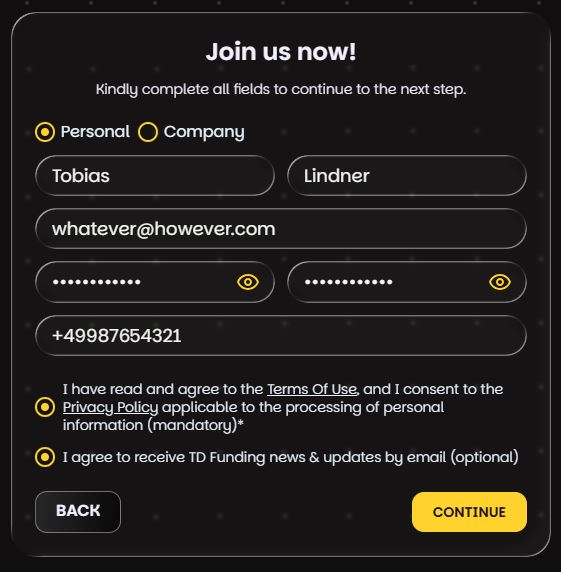
Signing up on Triple Dragon Funding is straightforward and only takes a few steps:
- Create an account by entering your email address and choosing a password.
- Verify your identity (e.g., using your ID card) — usually in under a minute.
- Add your personal details later during the process.
You can also register as a business if you want to invest through a company entity. Once your account is verified and your deposit is made, you’re ready to start investing into your first gaming loans.
Triple Dragon Funding Bonus
Currently Triple Dragon Funding also runs limited-time bonus promotions (+2% instant Cashback). After signing up, you should also see a large banner inside your account with a countdown timer — confirming that the registration via my link worked. If you don’t see it, just reach out to me via the contact form.

How do I deposit money?
Depositing funds is usually the easiest step when investing. In your dashboard, simply click “Top-up / Withdraw” and you’ll be taken directly to the deposit screen. There you’ll find the platform’s bank account details, which you can use to make a regular bank transfer.
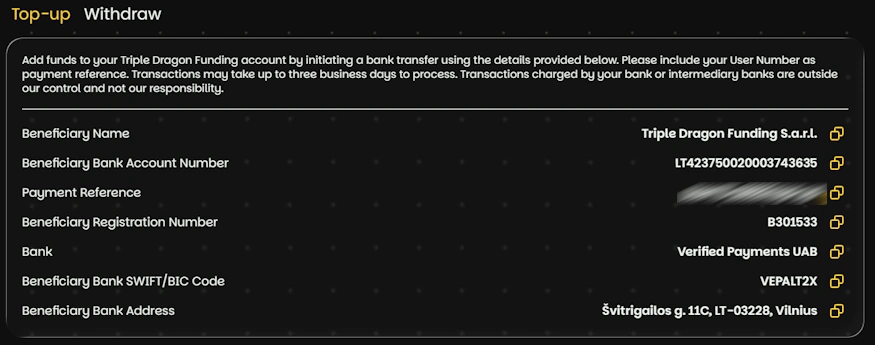
Please note that the transfer must come from your personal bank account. This account will also be verified and used for future withdrawals.
How do I withdraw money?
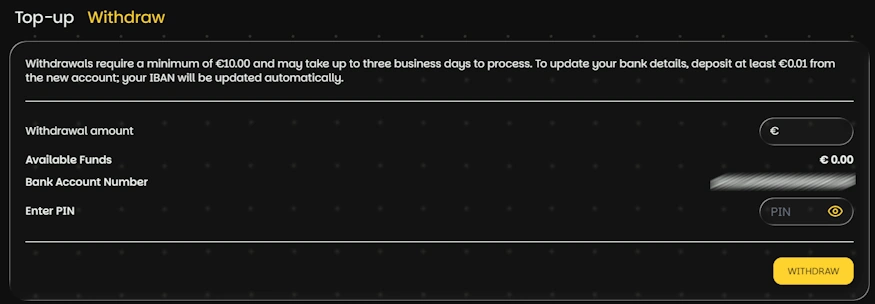
If you want to withdraw your capital or excess interest from Triple Dragon Funding, you follow the same path via “Top-up / Withdraw” — but this time you select “Withdraw” at the top.
There are no fees for withdrawals. Funds can only be paid out to a bank account in your own name. If you want to register a new payout account, you’ll need to make a new deposit from that new personal bank account first. Withdrawals are possible from €10 onwards.
How long does a deposit take?
Deposits usually arrive in your investor account within one business day.
Can I deposit and withdraw via credit card?
At the moment, credit cards are not supported for deposits or withdrawals. All transactions must be made via a bank account. The bank transfer is also used as part of the account verification / identification process.
However, if you use Wise or Revolut, you can often top up those accounts by credit card first (if you want), and then transfer the money to Triple Dragon Funding from there.
Triple Dragon Funding Review: How does the platform work?
After signing up on Triple Dragon Funding, you can use the “Invest” button to browse the available opportunities and do your own research. Investors select projects manually, and each investment is publicly displayed with a set of key facts and basic information.
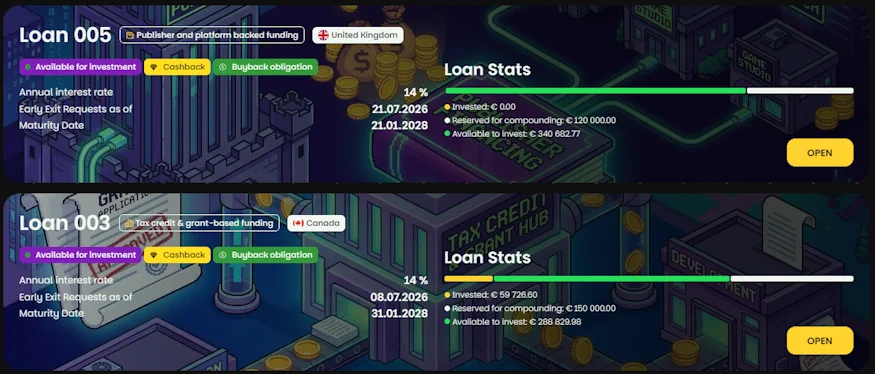
The project details are quite comprehensive — similar to what you’ll find on Ventus Energy, Asterra Estate, or Devon. You’ll get the key information at a glance, details about the borrower, the collateral, and a clear explanation of how the investment is structured and how it works in practice.
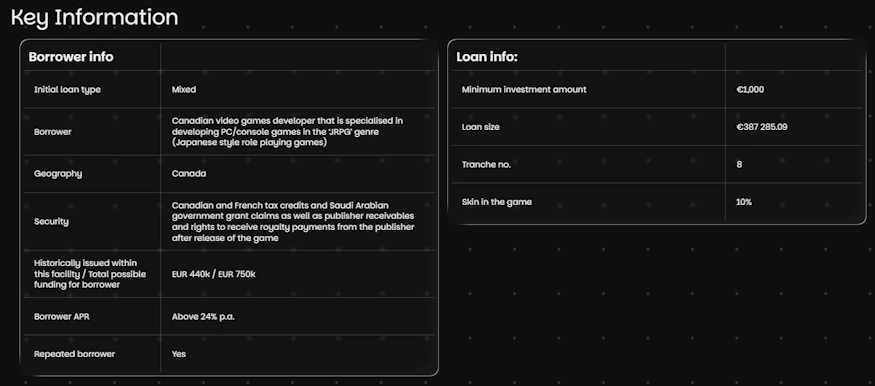
Skin in the Game of TD Funding
Two points are especially worth highlighting:
- Triple Dragon Funding always co-invests in its own loans (the exact “skin in the game” percentage is shown for each project).
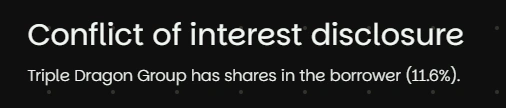
- Potential conflicts of interest are disclosed clearly and transparently.
Once you’ve chosen a project you want to invest in, you’ll need to confirm that you understand all the details — and then you can place your investment. You can also decide whether the interest should be automatically reinvested into the same project or paid out to your account balance.
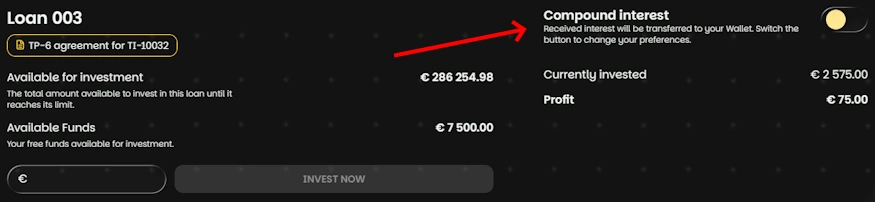
Just like on most other platforms, I personally prefer the payout option. You can configure this individually for each project and adjust it anytime.
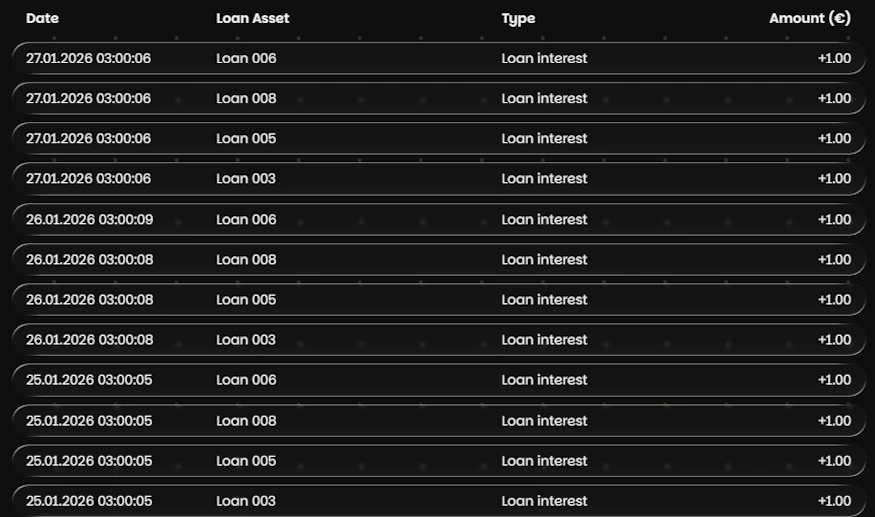
After you invest, interest accrues daily in your account — similar to Bondora Go & Grow or Monefit SmartSaver, just at a slightly higher interest rate.
For you as yield & cashback hunters:
If you want your cashback to be credited as withdrawable balance (cashback is usually added on top of the investment amount) and you plan to invest more than €1,000, you should first make the minimum investment (€1,000), then turn off compounding, and only then invest the rest. This way, the cashback will be credited to your available funds and will NOT be added into the project.
Example: Deposit €5,000 → invest €1,000 → switch off compounding → invest the remaining €4,000 → the cashback on the €4,000 can be withdrawn immediately.
Is there an Auto-Invest feature?
No — Triple Dragon Funding does not offer an auto-invest feature. Since the platform is expected to have only a limited number of projects at any given time, manual investing is basically the standard here. Personally, I also don’t expect auto-invest to be added anytime soon.
Is there a secondary market?
There is no classic secondary market on Triple Dragon Funding. However, similar to platforms like Ventus Energy, Devon, or Asterra Estate, you don’t necessarily have to hold your investment until the official end date. Each project comes with a minimum holding period, after which you can request an early exit (the exact period depends on the individual project).
In practice, this works because your position gets bought by another investor as soon as someone new invests into the same project. That also means: you’ll only be able to exit early if there is enough demand — Triple Dragon Funding will not pre-finance or buy you out itself.
Important: If you use the early exit option, part of your bonus (cashback) may be clawed back. You’ll find the exact terms in the project details. So this is not a platform where you can “game the bonus system” by entering and exiting quickly — and financially, it usually makes more sense to hold projects until maturity.
Which countries can you invest in?
Triple Dragon finances borrowers across several jurisdictions, including:
- United Kingdom
- Canada
- United States
- Brazil
- Denmark
- Portugal
- Spain
- Turkey
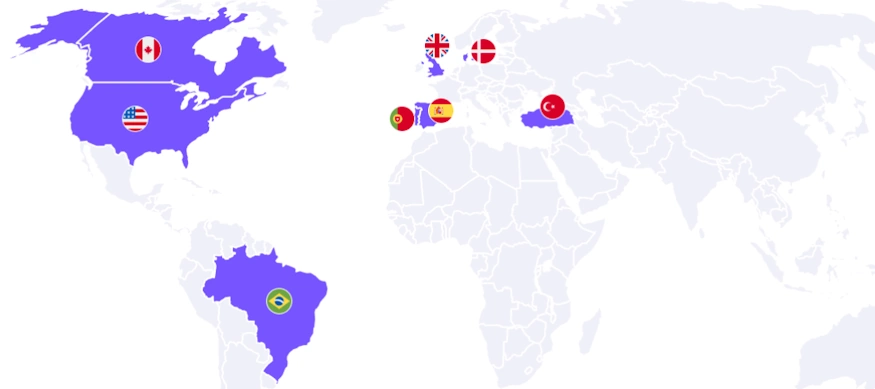
You can always check the project details to see exactly where your investment is allocated. Right now, the platform mainly offers loans from Canada and the UK, which also seems to be Triple Dragon’s core focus. Additional regions may be added over time.
What kind of projects can you invest in on Triple Dragon Funding?
On Triple Dragon Funding, you exclusively invest in secured business loans linked to the gaming and mobile app industry. Triple Dragon finances projects from game developers, app studios, publishers, and sometimes service providers within the gaming ecosystem. Funding is typically used for things like:
- User acquisition campaigns (marketing spend to acquire new players)
- Working capital for ongoing development projects
- Bridge financing until platform payouts are received
- Project funding for launching new games
In most cases, borrowers already generate revenue or have highly predictable incoming payments (e.g., App Store / Google Play proceeds, advertising income, or government incentives), which Triple Dragon can finance upfront.
As an investor, you are not investing in consumer loans — you’re investing in B2B projects (business lending). This creates a different risk/return profile compared to classic P2P consumer lending, as you’re essentially participating in growth financing within the tech sector.
Other loan types (real estate, personal loans, etc.) are not offered on Triple Dragon Funding and don’t seem to be part of the concept.
What fees does Triple Dragon Funding charge?
Investing on Triple Dragon Funding is free of charge across all levels — no investor fees for deposits, investing, or withdrawals.
Triple Dragon Funding Review: What returns can you expect?
The returns on Triple Dragon Funding are currently very attractive — and typically higher than investing in the same lender via Debitum. The main reason is simple: there is no marketplace in the middle taking a cut. At the moment, you can invest at a base rate of around 14% p.a. in many projects. If you combine this with cashback promotions, the effective return can be even higher.
It’s also worth mentioning that margins in this business are significant: borrowers are charged roughly 24%.
When will you receive your first interest payments?
Triple Dragon Funding works just like other WLS platforms. You receive your first interest after one full day has passed following your investment — usually within 24 to 48 hours. From that point on, interest is credited daily for the project you invested in.
What is the minimum investment on Triple Dragon Funding?
The minimum investment amount on Triple Dragon Funding is €1,000, which is relatively high compared to many classic P2P platforms. This is likely a deliberate setup from White Label Solutions, as the same minimum is used on Ventus Energy, Asterra Estate, and Devon.
The idea is to reduce “micro-investor volume”, which often creates higher support workload for the platform.
Does Triple Dragon Funding offer a buyback guarantee?
Triple Dragon Funding promotes a 90-day buyback guarantee, provided by the underlying special purpose vehicle (SPV) TD Funding 2025 Limited.
According to platform information, this SPV is planned to be capitalized with around €5 million by the parent company to support the guarantee.
That said, the standard rule still applies in every Triple Dragon Funding review: a buyback guarantee is only as strong as the entity behind it. You can still lose your invested capital.
Is there a Triple Dragon Funding app?
No — Triple Dragon Funding does not currently offer a mobile app.
Can you invest in other currencies?
No. On Triple Dragon Funding, investments are made only in EUR, so there is no currency risk inside the projects.
How does taxation work for Triple Dragon Funding investments?
If you invest on Triple Dragon Funding, you should understand how P2P lending taxes work in your country. The good news: Luxembourg does not apply withholding tax on interest, so you don’t lose any interest payments at the source.
Does Triple Dragon Funding provide a tax report?
Yes — Triple Dragon Funding already provides a tax report. You can find it under “Statements” in the “Tax Report” tab. There you can generate a document for the specific period you need.
Triple Dragon Funding Review: More about the risk
The company behind TD Funding has been operating for around 10 years already. That’s a major advantage compared to many newly launched P2P platforms where you’re basically investing “into the unknown”.
Still, the key rule remains: with any P2P investment, you can lose all of your invested capital. This is not only something you should understand when reading this review — you also have to explicitly confirm it when you start investing on the platform.
How does Triple Dragon Funding make money?
Triple Dragon Funding is essentially the direct investor platform of Triple Dragon itself. The platform is mainly an execution layer for investors and does not need to generate profits on its own — it is funded and operated by the parent company.
Triple Dragon earns money primarily through interest spreads and borrower fees. When Triple Dragon issues a loan to a game developer, a higher interest rate is charged to the borrower (for example ~25% p.a.).
Investors, on the other hand, receive a lower rate (for example ~14% p.a.). The difference between those two rates is the spread, which remains with Triple Dragon as revenue. This margin-based model is typical in private lending.
Is Triple Dragon Funding profitable?
Since Triple Dragon Funding acts mainly as the funding and distribution channel, the platform itself does not need to be profitable. What matters much more is whether the parent company (Triple Dragon) runs a profitable business — and based on the latest available information, it does. More recent numbers can be reviewed via the company’s published financial data.
What happens if Triple Dragon Funding goes bankrupt?
If something happens to the platform, your investments would not automatically stop overnight. The underlying loan claims would still exist and could be enforced or recovered depending on how much the borrowers are able (and willing) to repay.
However, in an insolvency scenario, recovered funds would very likely become part of the insolvency estate, meaning additional legal and administrative costs could be deducted. Delays and potential losses are also possible — especially if individual developers fail to pay.
As with most platform insolvencies, an insolvency administrator would typically take over the servicing of the remaining projects and distribute incoming payments to investors. From past cases in the P2P industry, we know that insolvency processes can be slow and often lack transparency. So yes: insolvency is a real risk and could impact your money.
How trustworthy is Triple Dragon Funding?
From my perspective, Triple Dragon Funding looks very credible. The company behind it has been operating since 2016 and was founded by experienced professionals from finance and legal backgrounds (including former Baker McKenzie lawyers and private equity experts).
It operates in a clearly defined niche — gaming finance — and has already attracted institutional investors. According to information published on Debitum, for example, Triple Dragon received equity funding from “several leading institutions”, which signals trust on a professional level.
In addition, Triple Dragon has been an established loan originator on the regulated P2P platform Debitum, which also supports its credibility.
On the other hand, Triple Dragon Funding itself is not yet a fully regulated financial institution in the classic sense (it currently operates under an exemption framework). This means the platform is not directly supervised by a financial regulator — although that may change in the future, as a regulatory license is clearly being pursued.
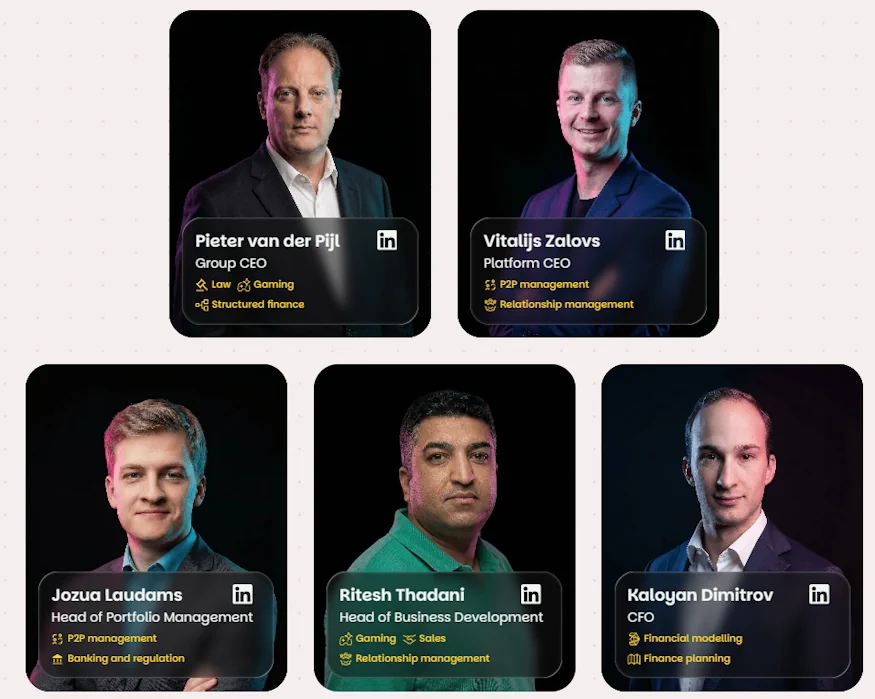
Also worth noting: Triple Dragon was able to bring Vitalijs Zalovs (former CEO of Esketit, with years of experience from Mintos) into the team. He is well-known in the P2P space, and that adds another strong credibility signal for the platform.
How safe is Triple Dragon Funding against defaults?
Triple Dragon Funding uses strong collateral structures, which is definitely a plus — especially compared to many classic consumer P2P platforms. The loans are typically secured by receivables from large, highly creditworthy companies such as Apple, Google, and other major tech players.
According to the project descriptions, Triple Dragon also uses tax credits and government grants as collateral, which is relatively uncommon in the P2P space.
This means that even if a borrower defaults, there should still be valuable collateral available that can be enforced or liquidated. On top of that, the collateral is usually overcollateralized, with security coverage of at least 120% of the outstanding loan amount. Additionally, Triple Dragon promotes a 90-day buyback guarantee once a payment is overdue.
The SPV structure adds another protective layer, because investor funds are legally separated from Triple Dragon’s own operational money and other liabilities.
But here is the risk you must not ignore: even with collateral, buyback guarantees, and SPV structures, investing in P2P lending can still lead to a total loss. You invest at your own risk, and there is no guaranteed protection like a bank deposit insurance scheme.
Are there any defaults on Triple Dragon Funding?
Triple Dragon Funding states on its website that write-offs are below 1%, based on a loan portfolio of over €50 million. After around 10 years in the lending business, that is an exceptionally strong track record.
Does Triple Dragon Funding offer deposit protection?
No — there is no deposit protection scheme. Any funds you hold or invest on the platform are exposed to default risk.
Is Triple Dragon Funding crisis-proof?
No platform is completely crisis-proof — and that includes Triple Dragon Funding. That said, the parent company was already active during the COVID-19 pandemic and throughout the Ukraine war, and according to available information, neither event had a negative impact on the business.
Pros and cons of Triple Dragon Funding
Before we move into the final conclusion, here’s a quick summary of the main pros and cons based on my Triple Dragon Funding review so far.
Advantages
- Attractive interest rates of up to 14%.
- Daily interest accrual.
- No direct geographic exposure to the Baltics (reduced Russia-related risk perception).
- Loans are backed by strong collateral.
- Early exit option available.
- No withholding tax.
- Long track record of the parent company.
Disadvantages
- The platform is not (yet) regulated.
- Project delays or a market downturn are possible.
- Relatively high entry barrier (€1,000).
- No audited annual reports available yet.
My Triple Dragon Funding Review – Final Thoughts
From my perspective, Triple Dragon Funding is an exciting — but still speculative — addition to a P2P portfolio. That said, it’s nowhere near as speculative as platforms like FF Forest or similar concepts. Here, we’re looking at a proven business model with a real operating track record.
What I personally find most attractive is the fact that Triple Dragon operates largely outside the typical Baltic P2P ecosystem. It gives investors access to markets that are usually not common in P2P lending — currently Canada and the United Kingdom.
It’s also a rare combination of positives coming together at the same time:
- a loan originator with years of successful history on Debitum, a company that has been active for around a decade,
- a CEO with deep industry experience from Mintos and Esketit,
- and a proven white-label tech provider (White Label Solutions) powering the entire platform.
For me, it wasn’t really a question whether I would take a closer look. I’ve already been invested in Triple Dragon loans via Debitum for years. At €1,000 minimum, I currently prefer exposure via Debitum; I may invest directly later and update this review.
Is there a Triple Dragon Funding forum or community?
Yes — there are several places where you can exchange ideas with other investors and collect real-world Triple Dragon Funding experiences. There is also an official Telegram channel that interested investors can join.
What are the alternatives to Triple Dragon Funding?
Right now, the only real alternative is Debitum. You can also invest in Triple Dragon loans there. The main advantage is the regulated framework, while the downside is typically lower interest rates.
Other than that, there currently isn’t another platform in the P2P space that offers comparable access to gaming-related business loans.